
Race for the Galaxy
Temple Gates Games LLCBoard
4.1225.00 Reviews
- Version
- 1.0.1613
- Installs
- 10.00K
- Age Rating
- Everyone 10+
Screenshots
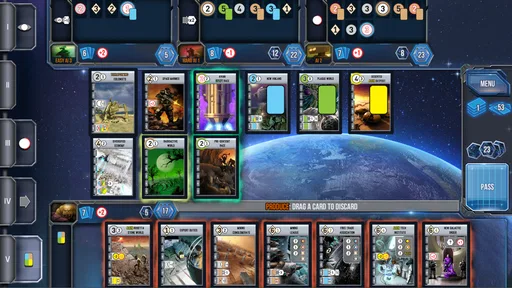
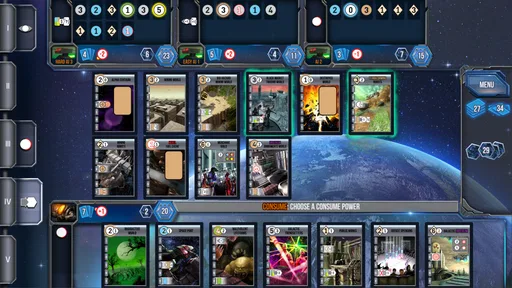
Our Review of Race for the Galaxy
 Analysis by Appyee
I like digital board games that respect the time it takes to learn a real strategy, but still let me fit a match into an ordinary break. Race for the Galaxy is an ambitious fit for that balance: it asks you to build an interstellar civilization through card choices, and rewards attention more than quick tapping. My first impression is that it is best approached as a compact strategy game with a genuine learning curve, not as a casual space-themed diversion.
A quick game still asks for careful thought
The pace comes from making decisions efficiently, not from the game being shallow. Once I understood what the available roles could do, turns felt brisk: I could weigh my own plans against the possibility that another player would choose a role I could benefit from. Early on, though, the same options can slow everything down. I was still learning the symbols and considering what each card might be useful for, so a supposedly short session could feel mentally busy.
That difference matters if you are looking for something to play while only half paying attention. I would save this for a break when I can focus, or for a quiet commute if I have a suitable device and a little uninterrupted time. The game’s strategic pace is satisfying when I can follow the choices; it is less enjoyable when I keep switching away and have to reconstruct what I was planning.
Where the mental load builds
The busiest moments arrive when several cards could support different plans. A world that looks useful for settling may also fit a production or trade approach, and committing to one direction can make the others less practical. The interesting decision is not simply whether a card is strong, but whether it is worth giving up its other possible uses. That tension makes choices feel consequential, especially once I have a few pieces of an engine working together.
My practical tip is to decide what you want your next few turns to accomplish before getting lost in every possible combination. If I am trying to develop, I look for cards that support that direction instead of treating each new option as a reason to start over. This keeps the game moving and helps reveal why a plan succeeded or stalled. It is also a good way to learn: after a loss, I can examine whether I chose roles that advanced my own board or merely hoped the opponent would make a convenient choice.
That kind of reflection is part of the appeal, but it also explains who may not enjoy the game. If you prefer a board game whose rules are obvious at a glance, or one where luck and a quick shared laugh matter more than planning, this can feel demanding. I would point a family looking for a very simple first board game toward something lighter. The Everyone 10+ rating gives a useful age guide, but it does not remove the need to learn the game’s vocabulary and strategic rhythm.
How it fits into a real day
On an ordinary day, I can imagine opening it when I have a proper stretch of downtime rather than trying to squeeze in a turn between unrelated tasks. A lunch break works if I already know the rules; a first session is better when I can pause to inspect cards and follow the tutorial without feeling rushed. For someone who likes replaying a board game to improve, that gradual shift from decoding the interface to spotting useful patterns is a good reason to return.
It also suits two different moods. When I want to practise decisions without coordinating with anyone, the solo option gives me a way to work through the game. When I want the unpredictability of another person’s choices, online play is the more social test. Those are meaningfully different reasons to open it: one is about learning and refining a plan, the other about adapting to a rival. I would not assume every session will feel equally relaxed, since competing against a person can make the same decisions more urgent.
Reliability, screen space, and expectations
My impression of the digital format is that it makes a fairly involved board game easier to manage, but it cannot make the underlying decisions effortless. Clear card art and a considered interface help me read the game, while the tutorial reduces the initial guesswork. Even so, players new to this style of strategy should expect to spend time learning what the options mean rather than judging the app only by how quickly they can begin.
On a smaller phone, the main practical question is whether you enjoy examining cards and thinking through choices on a compact screen. A tablet or a larger display may feel more comfortable for long sessions simply because there is more room to take in a board-like layout, but the game’s strategic appeal does not depend on having a particular device. I would also keep the current version, 1.0.1613, in mind when checking whether a device can run it: Android 5.0 is the stated minimum. I cannot promise how it will behave on every handset, so anyone with an older or less capable device should check compatibility before buying.
For a paid game, the practical questions are worth answering before you commit. It costs $6.99, carries a 4.1 average from around 1.1K ratings, and has 10K+ installs. Temple Gates Games LLC is the developer, and the game is rated Everyone 10+. There are in-app purchases priced at $3.99 per item, so I would check what an individual purchase offers and whether it fits what I want before spending more. The base purchase makes the most sense for someone who already likes thoughtful card-driven board games and expects to revisit one title; it is a harder recommendation if you only want an occasional, low-commitment distraction.
Exploring the Galaxy
The first thing that struck me about Race for the Galaxy was its depth. The game is a digital adaptation of the popular card game, and it does a fantastic job of capturing the strategic complexity and excitement of the original. You start by building your own galactic empire, which sounds pretty epic, right? But it’s more than just expanding; it’s about making smart decisions and adapting to the ever-changing cosmos.
Each turn, you choose a role that determines your actions, such as exploring new worlds, developing technologies, or producing and trading goods. The choices you make directly impact your strategy, and this is where the game really shines. You have to think several steps ahead and anticipate your opponent's moves. It's like playing chess, but with spaceships and alien worlds.
Learning the Ropes
Now, I won't sugarcoat it – there’s a bit of a learning curve. If you're new to the game, the tutorial is your best friend. It’s thorough and helps you get acquainted with the interface and mechanics. Once you get the hang of it, though, it’s incredibly rewarding. You'll find yourself coming back for "just one more game" more times than you’d like to admit.
The interface is sleek and intuitive. It’s clear that a lot of thought has gone into making the app user-friendly. Each card is beautifully designed, and there’s something really satisfying about watching your empire grow visually on the screen.
Multiplayer Mayhem
One of my favorite aspects is the multiplayer mode. You can challenge friends or random players online, which adds a whole new layer of excitement. There’s nothing quite like outsmarting a real human opponent and claiming victory. Plus, the matchmaking is pretty quick, so you’re never waiting around too long to jump into a game.
If you prefer flying solo, don't worry; there’s a robust single-player mode too, where you can test your mettle against AI opponents. The AI is surprisingly clever, keeping you on your toes and ensuring that no two games are ever the same.
Strategic Depth
What makes Race for the Galaxy stand out is its strategic depth. Every game is a new puzzle to solve, and there are countless paths to victory. Do you focus on a military strategy, conquering worlds with your fleet? Or do you build a peaceful empire, rich in trade and technology? The choices are endless, and the replayability is off the charts.
Plus, there are expansions available, which add new cards and strategies to explore. It’s a game that grows with you, offering new challenges as you become more skilled.
Final Thoughts
All in all, Race for the Galaxy is a must-try for anyone who loves strategy games. It's challenging yet accessible, and it offers a unique experience every time you play. Whether you're strategizing against AI or competing with friends, there's always something new to discover in the vastness of space.
So, if you're ready to embark on a cosmic adventure and see how you fare in the race to build the ultimate galactic empire, give this game a shot. Trust me, you won't be disappointed!
Verdict
Strengths of Race for the Galaxy
- Rich strategic depth and variety.
- Intuitive interface for smooth play.
- Supports multiplayer mode seamlessly.
- Frequent updates with new expansions.
- Offline mode available for solo play.
Limitations of Race for the Galaxy
- Steep learning curve for beginners.
- Graphics may appear outdated to some.
- In-game purchases can add up quickly.
- Occasional minor bugs in multiplayer.
- Limited tutorial guidance for newcomers.
Other Releases by Temple Gates Games LLC
View All
Shards of Infinity
Card3.4
Similar Picks in This Category
View All
Ludo King®
Gametion4.1

Ludo
Yarsa Games4.6

Tile Master® - Matching Game
Higgs Studio3.6

Checkers Online
CC Games4.6

Dominoes
Loop Games4.7

Chess
Chess Prince4.6
Frequently Asked Questions
What is Race for the Galaxy, and how do I play it?
Race for the Galaxy is a strategic card game where players compete to build the most prosperous galactic civilization. You do this by playing cards representing worlds or technological developments, which provide victory points and other benefits. The game involves strategic planning, resource management, and tactical card play. A tutorial is available for new players to grasp the mechanics quickly.
Is Race for the Galaxy suitable for beginners?
While Race for the Galaxy has a complex rule set and a variety of strategies, it offers a tutorial and adjustable difficulty levels to help beginners get started. The game's interface is user-friendly, and additional guides are available within the app to assist new players in understanding the nuances of gameplay.
Does Race for the Galaxy support multiplayer mode?
Yes, Race for the Galaxy supports both online and offline multiplayer modes. You can compete against friends or random opponents online, or play offline against AI opponents with different difficulty settings. This flexibility makes it easy to enjoy the game solo or with others, depending on your preference.
Can I play Race for the Galaxy without an internet connection?
Yes, Race for the Galaxy can be played offline against AI opponents. This feature is perfect for players who want to enjoy the game on the go without needing an internet connection. However, certain features like online multiplayer and updates will require internet access.
What are the in-app purchases in Race for the Galaxy?
Race for the Galaxy offers in-app purchases primarily for expansions that add new cards and mechanics, enhancing the depth and replayability of the game. While the base game provides a rich experience, these expansions can add variety and new challenges for experienced players looking for more content.
Play our best games!


